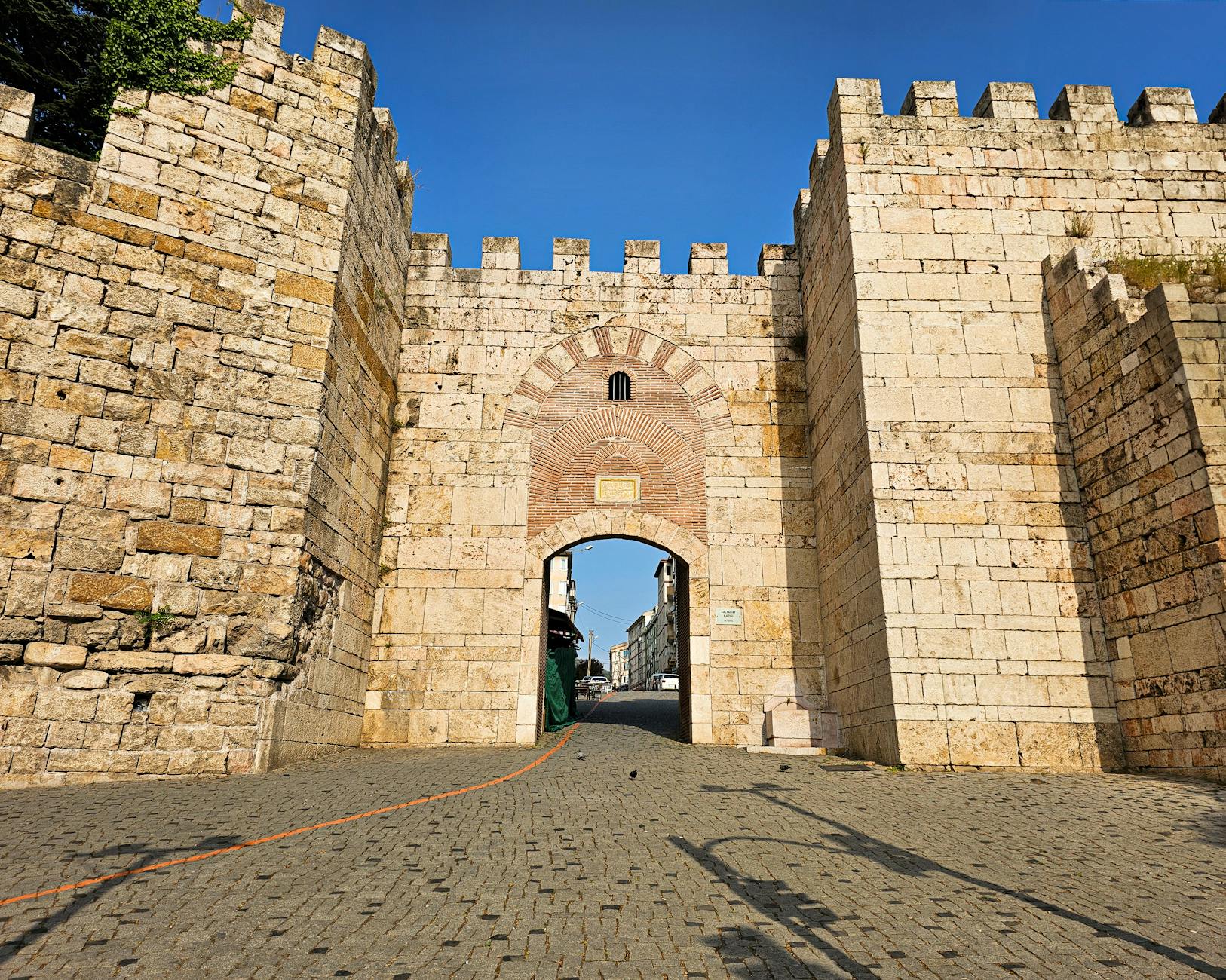
2 Samuel 18:33 “And the king was deeply moved and went up to the chamber over the gate and wept.”
2 Samuel 19:8 “Then the king arose and took his seat in the gate. And the people were all told, ‘Behold, the king is sitting in the gate.’ And all the people came before the king.”
One of the things that is important to remember in studying the Bible is that nothing that is written should be passed over quickly or lightly. God said what He said for a reason. It’s all to teach us truths that are hidden in Him and that will be revealed as we seek Him and ask for understanding. He wants us to understand, but He will not “give dogs what is holy” or “throw pearls before pigs” (Matthew 7:6). In other words, God is not obligated to reveal His precious truth, things that are more precious than gold (Psalm 19:10), to those who see no value in them.
What is an example of such things? Well, in the verses above from 2 Samuel 18 and 19 we have mention of King David, who had positioned himself in the gate of a city. It was a gate to the place where the king dwelt. So what? Is there any importance to this fact? Or is it a part of the story that was placed there for “filler,” something the reader can either take or leave?
As I began to meditate on this account, it occurred to me that the word “gate” occurs many times in the Scriptures. In Matthew 7 Jesus talks about a broad gate that leads to destruction and a narrow gate that leads to life. In Nehemiah 3 there is mention of 12 gates, each with a different name, that were constructed as part of the rebuilding of the walls around Jerusalem. In Revelation 21 there is mention of 12 gates of pearl that are the gates into the city of the New Jerusalem in heaven. There’s much, much more. But as we think about gates, we should ask ourselves what they represent.
Well, in any use of the term, we are typically thinking about the way in or out of some place that is protected by a wall or fence. For example, I’ve placed a gate in the fence that surrounds my garden. The fence is meant to keep the rabbits out, but the gate is also the means for me to go in. Gates are an entrance point, but they are a point that typically require a means whereby we can go in – perhaps with a key. In the verses above we find David in the gate. It’s where his servants met him. It was the gate to his dwelling place. In the first passage we find David as two messengers arrive to bring him news of the defeat of his enemies, but one of those enemies was his own son, Absalom, who had led the revolt. The first messenger had brought David the “good news” that his enemies had been defeated and that his kingdom had been saved. The second brought the bad news that that victory had come at the cost of his own son. Then in the second verse we find David sitting at the gate after he had “arose” from his sorrow over his son’s death. It was because of David’s sorrow that we are told that, despite the victory, “that day was turned into mourning for all the people.” It said the people’s attitude was “as people steal in who are ashamed when they flee in battle” (2 Samuel 19:2-3). Perhaps in these events at the gate are some shadows of things that are involved if people are to come to the king who guards the gate to the heavenly kingdom.
For example, as King David’s place in these events was at the gate of the city, we are told that Jesus IS the Gate, for He is the Way to eternal life in the eternal city (John 10:9; John 14:6). And as the messengers came to David with a two-part message in 2 Samuel 18, the entrance into the gate of heaven also comes by way of a two-part message. It’s the message of victory over man’s greatest enemies of sin, death, and hell, but that victory is only made possible by the death of the Son of David, God’s only begotten Son.
But then notice in the second verse above that before the people came to David at the gate, they first went through a time of sorrow and shame that was rooted in the death of David’s son. You see, it was because of their own actions that Absalom had died. They had caused the death of the king’s son. Even so, for anyone to ever enter the gate who is Christ, they must come by way of sorrow and shame over their hand in His death, for Jesus died because of our sins and not as a result of His own. No one ever enters the Gate without this, for as Jesus said, “blessed are those who mourn, for they (and only they) shall (ever) be comforted (by Him)” (Matthew 5:4).
So, have you met the King of kings in the gate? Have you heard and believed the message of the gospel, and have you believed that message which is the means to faith (Romans 10:17)? If you have, you will be one whose eyes have been opened to the guilt of your sin. You will have been ashamed at the awfulness of it, and you will have mourned because of it. But that’s the way to the kingdom. That’s the only means by which anyone has ever entered this most glorious Gate.


Leave a Reply