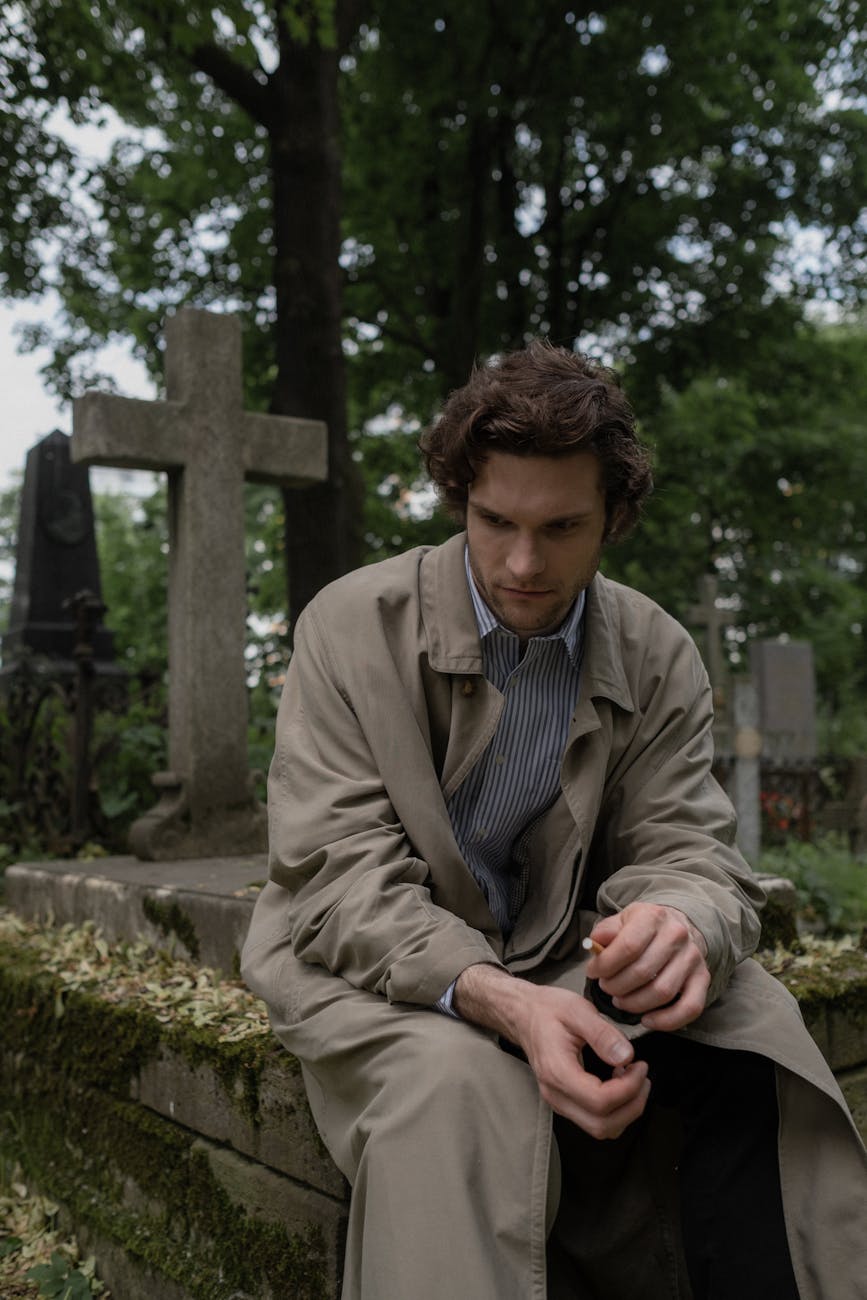
2 Samuel 12:19-23 “And David said to his servants, ‘Is the child dead?’ They said, ‘He is dead.’ Then David arose from the earth and washed and anointed himself and changed his clothes. And he went into the house of the Lord and worshiped. He then went to his own house. And when he asked, they set food before him, and he ate. Then his servants said to him, ‘What is this thing that you have done? You fasted and wept for the child while he was alive; but when the child died, you arose and ate food.’ He said, ‘While the child was still alive, I fasted and wept, for I said, “Who knows whether the Lord will be gracious to me, that the child may live?”But now he is dead. Why should I fast? Can I bring him back again? I shall go to him, but he will not return to me.’”
The Bible says that “the wages of sin is death” (Romans 3:23). That means that we will all die because of our sin, and, tragically, sometimes, as in King David’s case above, others may die because of our sin, as well. It is to these points that the passage above speaks, but beyond that it speaks to the hope that we have in spite of it.
As a result of David’s sin with Bathsheba and subsequent repentance, God, wonderfully, “put away” David’s sin and as a result, he did not die (at least at that moment) (2 Samuel 12:13). Yet, God still disciplined David severely, and one aspect of that discipline was that the child born of David’s sin became sick and died at just seven days of age. During the time of the child’s illness, David fasted and prayed. He sought the Lord’s mercy because he knew that the Lord was a merciful God. However, the answer to David’s prayers was “No.” So what was David’s response? The Bible says that “he went into the house of the Lord and worshiped.” He didn’t get bitter against God for this calamity. He didn’t turn against Him. Rather, David turned toward Him and continued to worship Him no matter what. It was with this and David’s subsequent actions that he demonstrated the reality of his relationship with God. In spite of David’s sin, and in spite of the horrible consequences of it, David’s response honored God.
David reminds me of Job, another Old Testament saint. Tremendous calamity came into Job’s life as well, but, unlike David, Job’s hardships were not a result of any sin. His calamity came in spite of his righteous and just life. Yet in all this, “Job did not sin or charge God with wrong” (Job 1:22).
You see, both Job and David acknowledged by their responses to suffering that they knew that God’s ways were higher than theirs. They acknowledged that God is good all the time, come what may into their lives. It’s because of this knowledge that believers’ response to suffering should be different than that of the world. Although we don’t understand everything that goes on in our lives, we know that our God does, and we can trust Him, no matter what. We understand that sin has affected this world, both our own sin and the sins of others. That’s why there is suffering, pain, and death. That’s what God has told us and we accept that as God’s truth. And still, we worship Him. We hope in Him. We trust Him, or at least we should. We should have an eternal outlook on it all, an outlook that is so different from that of the world.
We see an example of this in David’s worship, and we see it in David’s words after his son’s death. He states that although his son would never return to him, yet he would go, someday, to his child. First, this was an acknowledgment that David, too, would eventually die. Every death of a loved one or friend should give us a renewed awareness of this fact. It is whether we know the Lord at that time that will make all the difference in the world. You see, Christians “do not grieve as others who have no hope” (1 Thessalonians 4:13). We have the confidence that although our loved ones who know the Lord cannot return to us, we will go to them, not only in terms of our own death, but in our reunion with them in heaven. This includes infants, like David’s son, which should be a great comfort to any Christian who has lost a little child.
God’s forgiveness of our sin is a wonderful thing, no matter how sin has affected our life in this world. We do not grieve as those who have no hope, not for our own sin and not for the consequences of sin in this world. And it’s all because we have the gift of God’s Son and His death for that sin that has brought forgiveness and eternal life to all who will believe.
Praise God for the death of His Son that gives eternal hope to those like David, Job, and any other person who has ever lived, who, like them, will believe.
 To Encourage You
Leave a comment