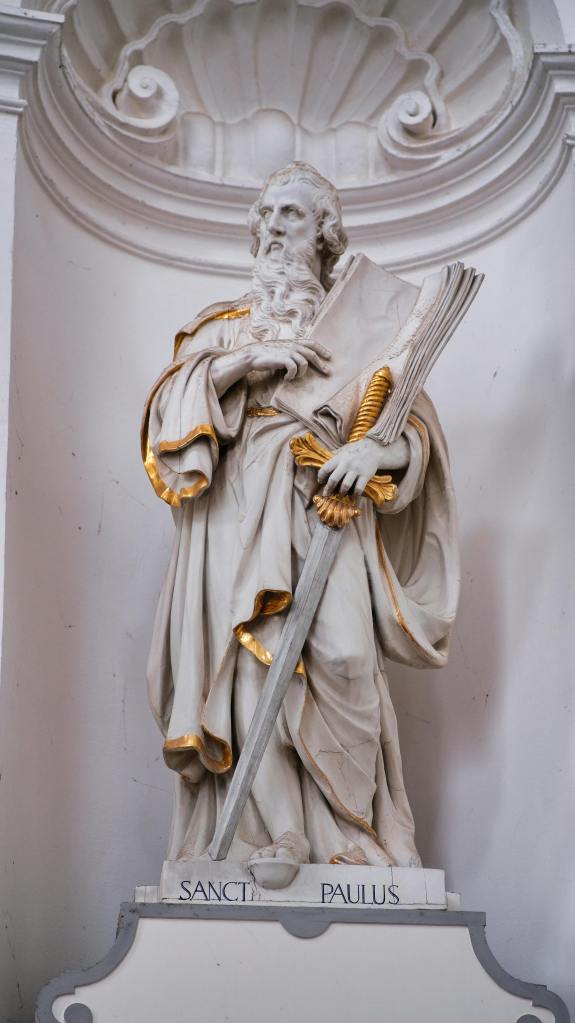
2 Corinthians 10:18 “For it is not the one who commends himself who is approved, but the one whom the Lord commends.”
What’s the difference between a false teacher and a true godly leader? It’s something that the apostle Paul dealt with in the first century, as we can see in his statement above, and it’s something that is just as critical today. Throughout 2 Corinthians 10, Paul is defending himself against the accusations of false teachers that he himself was false. They had accused him of such things as being two-faced, of having sinful ulterior motives, that he wasn’t like them (as if that was a justification in and of itself), and that his letters were frightening, i.e., that they went too far. They even attacked his physical characteristics, things like having a “weak bodily presence” and “speech of no account.”
In response, Paul affirms his love for the church. He appeals to them with “the meekness and gentleness of Christ.” He confirms that he is the same person when he is away from them as he is when he is with them. He reminds them that he is the first one from whom they had heard the gospel, and he also reminds them that his authority as an apostle had been given him directly by the Lord. But then he says the words from the verse above. What he is telling them is that it isn’t self-commendation that is the key to his ministry. Ultimately, it is the commendation of the Lord that matters. And how was that commendation known? One evidence was the amazing story of Paul’s conversion. It was widely known what he had been a persecutor of the church, but now he was one who loved and served the church. Another evidence of his genuineness was the consistency of the message he spoke and the letters he wrote with the Word of God that had already been written. It’s like the church at Berea which was commended because “they received the word with all eagerness, examining the Scriptures daily to see if these things were so.” Surely Paul’s message rang true when tested in this way.
Another commendation was his life. It was consistent with what he preached. He walked the talk. Earlier he had reminded them of the things he had endured for the sake of the gospel with these words: “We put no obstacle in anyone’s way, so that no fault may be found with our ministry, but as servants of God we commend ourselves in every way: by great endurance, in afflictions, hardships, calamities, beatings, imprisonments, riots, labors, sleepless nights, hunger; by purity, knowledge, patience, kindness, the Holy Spirit, genuine love; by truthful speech, and the power of God; with the weapons of righteousness for the right hand and for the left; through honor and dishonor, through slander and praise. We are treated as impostors, and yet are true; as unknown, and yet well known; as dying, and behold, we live; as punished, and yet not killed; as sorrowful, yet always rejoicing; as poor, yet making many rich; as having nothing, yet possessing everything” (2 Corinthians 6:3-10). And why were Paul and the other true apostles treated in this way? Because they spoke the truth. They didn’t water down the message of the gospel so that people would go away feeling good. They spoke with conviction as moved by the Holy Spirit, and that truth convicted those who heard it of sin, righteousness, and judgment (John 16:8).
Thankfully, it is not only the Corinthians that were blessed by the teaching of Paul, but anyone with access to a Bible can receive the same blessings from this God-appointed and God-commended apostle. May God help us to study the truth of the Scriptures given to us by the apostles and prophets of God, and compare any message we hear with this truth, for it’s always the best test of what has truly come to us from God.
 To Encourage You
Leave a comment